

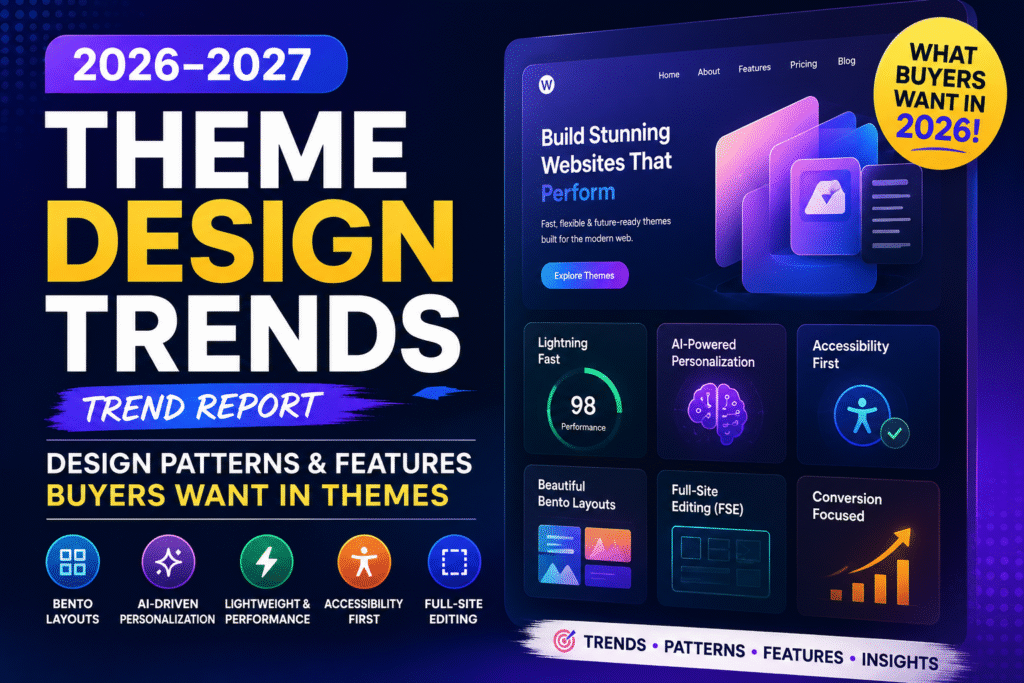
The theme market is evolving rapidly. Buyers no longer choose themes based solely on visual appeal—they evaluate performance, accessibility, AI capabilities, customization flexibility, and conversion-focused features. This 2026-2027 trend report explores the design patterns, technologies, and user expectations shaping the future of website themes for developers, creators, agencies, and business owners.
The 2026-2027 Trend Report: Design Patterns & Features Buyers Want in Themes
Quick Answer
The biggest theme design trends 2026 are:
- Bento grid layouts inspired by modern product design
- Accessibility-first design systems
- AI-driven personalization
- Lightweight, performance-first development
- Native dark mode support
- Functional micro-interactions
- Full-Site Editing (FSE) compatibility
- Conversion-focused blocks
- Modular design architectures
- Privacy-friendly analytics integrations
Featured Snippet: What Are the Most Important Theme Design Trends in 2026?
The most important theme design trends in 2026 are performance-first architecture, AI-powered personalization, accessibility-focused design systems, Bento grid layouts, micro-interactions, Full-Site Editing compatibility, and built-in conversion features. Modern buyers expect themes to be lightweight, mobile-optimized, visually engaging, and capable of adapting content experiences based on visitor behavior.Table of Contents
- Why Theme Buyers Have Changed
- What Is Driving Theme Design Trends in 2026?
- Visual Layout Trends
- Interaction & Motion Trends
- Technical Infrastructure Buyers Demand
- AI-Powered Theme Experiences
- Accessibility-First Design Systems
- Full-Site Editing (FSE) Evolution
- Conversion Features Buyers Expect
- Performance Benchmarks for Modern Themes
- Design Patterns Comparison Table
- Common Mistakes Theme Developers Make
- Best Practices for Theme Creators
- Expert Predictions for 2026
- Frequently Asked Questions
- Conclusion
Why Theme Buyers Have Changed
Five years ago, theme buyers often selected products based on aesthetics alone.
Today, the decision process is dramatically different.
Whether the buyer is:
- A creator launching a newsletter
- An agency managing dozens of clients
- A SaaS startup
- A local business owner
- An eCommerce entrepreneur
| Evaluation Factor | Importance in 2020 | Importance in 2026 |
|---|---|---|
| Visual Design | High | High |
| Performance | Medium | Critical |
| Accessibility | Low | Critical |
| AI Features | None | High |
| FSE Support | None | High |
| Conversion Tools | Medium | Critical |
| Mobile UX | High | Critical |
The result is a fundamental shift in what sells.
What Is Driving Theme Design Trends in 2026?
Several forces are reshaping buyer expectations:
AI Search Engines
Users increasingly discover websites through:
- ChatGPT
- Gemini
- Perplexity
- Bing Copilot
Themes must support content structures that AI systems can easily understand and retrieve.
Core Web Vitals
Search visibility increasingly depends on:
- Largest Contentful Paint (LCP)
- Interaction to Next Paint (INP)
- Cumulative Layout Shift (CLS)
Mobile-First Consumption
More than half of global traffic continues to originate from mobile devices.
User Experience Expectations
People compare every website against experiences from:
- Apple
- Notion
- Stripe
- Airbnb
- Linear
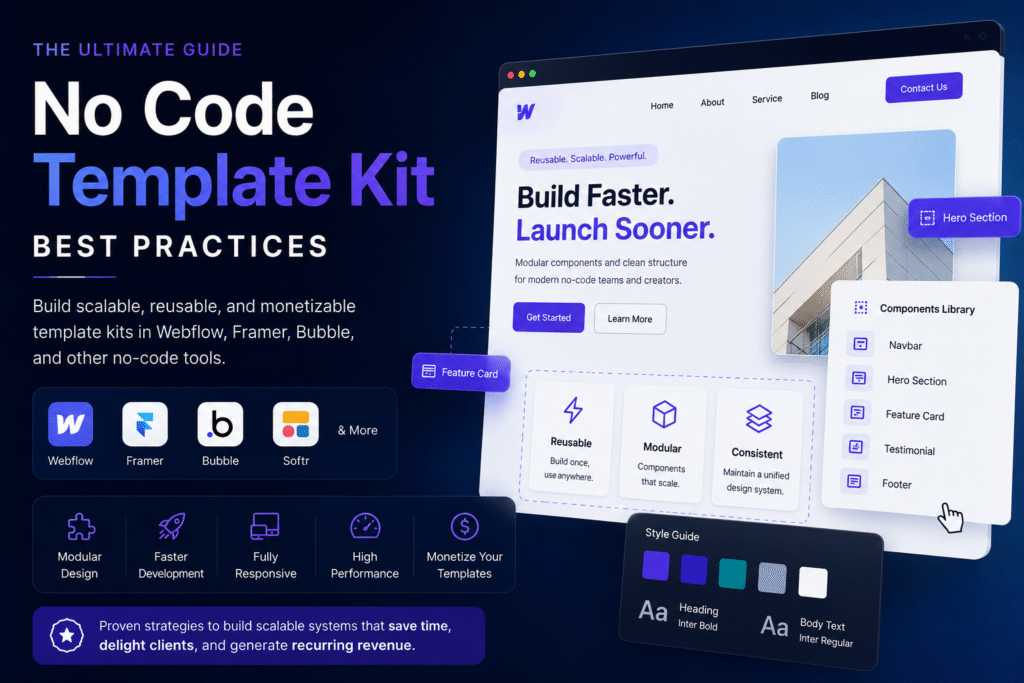
No Code Template Kit Best Practices for Scalable Design
Creating reusable template kits is no longer just a productivity hack. For modern no-code developers, designers, and digital creators, reusable systems are the foundation of scalable operations.
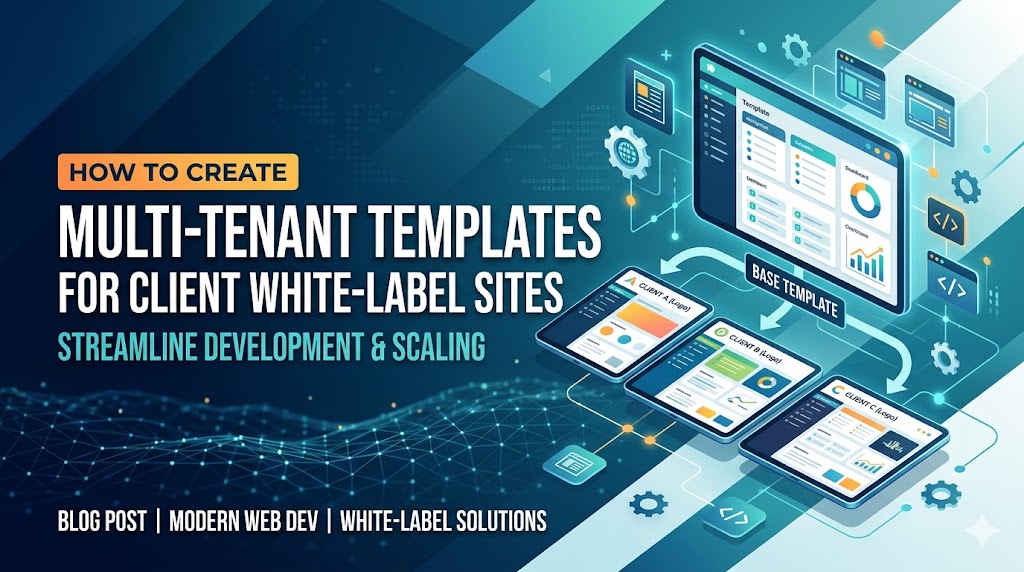
How to Create Multi-Tenant Templates for Client White-Label Sites
Modern SaaS companies rarely build a completely separate frontend for every customer anymore. Instead, they rely on multi-tenant templates white label architectures that allow a single codebase...
Visual Layout Trends Defining 2026
1. Bento Grid Web Layouts Become Mainstream
Perhaps no visual pattern has grown faster than Bento grids.
Popularized by modern product websites, Bento layouts organize content into modular cards with varying sizes and hierarchy.
Benefits include:
- Better content scanning
- Strong visual storytelling
- Mobile adaptability
- Higher engagement
Why Buyers Love Bento Layouts
Instead of long vertical pages, visitors can instantly identify:
- Key features
- Pricing
- Testimonials
- Product benefits
without excessive scrolling.
Best Use Cases
- SaaS websites
- Portfolio themes
- Agency sites
- AI tools
- Startup landing pages
2. Organic Asymmetry Replaces Perfect Grids
Traditional 12-column layouts still matter.
However, modern themes increasingly embrace:
- Controlled asymmetry
- Offset elements
- Dynamic spacing
- Intentional visual imbalance
This creates more memorable experiences.
Example
Old approach:
[Card][Card][Card]
[Card][Card][Card]
Modern approach:
[Large Feature]
[Card][Card]
[Wide Testimonial]
[Card]3. Layered Depth Without Heavy Effects
2026 designs use subtle depth cues:
- Soft shadows
- Glass-inspired surfaces
- Layered cards
- Floating navigation
Interaction & Motion Trends
What Are Functional Micro-Interactions?
Micro-interactions are small animations that provide feedback to users.
Examples:
- Hover states
- Button responses
- Progress indicators
- Form confirmations
The key trend is moving from decorative motion to functional motion.
Functional Motion vs Decorative Animation
| Functional Motion | Decorative Motion |
|---|---|
| Improves usability | Purely aesthetic |
| Guides attention | Distracts users |
| Supports accessibility | Can reduce usability |
| Improves conversion | Often ignored |
Examples Buyers Want
Smart Navigation Indicators
Users understand exactly where they are.
Interactive Pricing Tables
Plans expand dynamically.
Contextual Hover States
Important information appears only when needed.
Form Completion Feedback
Users receive instant validation.Lightweight Theme Development
One of the strongest purchasing trends is the move toward lightweight theme development.
Buyers increasingly reject themes that:
- Load unnecessary assets
- Bundle dozens of plugins
- Generate bloated HTML
Instead, they prefer:
- Minimal CSS
- Optimized JavaScript
- Efficient rendering
- Reduced dependencies
Performance Benchmarks Buyers Expect
| Metric | Desired Range |
|---|---|
| PageSpeed Score | 90+ |
| LCP | Under 2.5s |
| INP | Under 200ms |
| CLS | Under 0.1 |
| JS Payload | Under 150KB |
| CSS Payload | Under 100KB |
Example Optimization Workflow
npm install
npm run build
npm run analyze
CSS Purging
module.exports = {
  content: ['./src/**/*.{html,js,php}'],
}
Asset Compression
npm run optimize-imagesAI-Driven Theme Personalization
What Is AI Theme Personalization?
AI-driven personalization adapts content, layouts, and recommendations based on visitor behavior.
Examples:
- Dynamic hero sections
- Personalized CTAs
- Smart product recommendations
- Audience segmentation
Why Buyers Want It
Modern users expect relevance.
An agency visitor should see agency-focused messaging.
A developer visitor should see developer-focused messaging.
AI personalization makes this possible.Emerging AI Features in Themes
AI Block Suggestions
Content blocks recommended automatically.
Smart Layout Generation
Page structures generated from content.
Behavioral Personalization
Different experiences for different audiences.
AI-Powered Search
Natural language search experiences.Accessibility-First Design Systems
Why Accessibility Matters More Than Ever
Accessibility is no longer a compliance checkbox.
It is a competitive advantage.
Accessible themes:
- Reach larger audiences
- Improve usability
- Support SEO
- Reduce legal risks
Accessibility Features Buyers Expect
Keyboard Navigation
Every feature should be accessible without a mouse.
Screen Reader Compatibility
Semantic HTML matters.
Proper Contrast Ratios
Text must remain readable.
Reduced Motion Preferences
Users can disable animations.Full-Site Editing (FSE) Templates Continue Expanding
What Is Full-Site Editing?
Full-Site Editing allows users to customize:
- Headers
- Footers
- Templates
- Layouts
Why Buyers Prefer FSE Themes
Benefits include:
- Faster customization
- Reduced developer dependency
- Lower maintenance costs
- Better content ownership
What Successful FSE Themes Include
Template Variations
Different layouts for:
- Blogs
- Portfolios
- Landing pages
- Events
Pattern Libraries
Reusable design blocks.
Global Style Controls
Site-wide design consistency.Conversion Features Buyers Expect
Themes Are Becoming Growth Platforms
The modern buyer wants more than design.
They want measurable business outcomes.Website Features Buyers Want Most
Native Lead Capture
Built-in forms.
Event Management Integration
Solutions similar to WP Event Manager integrations continue gaining demand.
Testimonial Systems
Trust signals remain powerful.
Conversion-Focused CTAs
Strategic call-to-action placements.
Smart Popups
Behavior-based engagement.
Analytics Integration
Easy measurement of performance.Design Pattern Comparison Matrix
| Pattern | UX Impact | Performance | Popularity |
|---|---|---|---|
| Bento Grid | High | High | Very High |
| Masonry Layout | Medium | High | Medium |
| Traditional Grid | Medium | Excellent | High |
| Asymmetrical Layout | High | High | Growing |
| Full Screen Scroll | Medium | Medium | Declining |
Common Mistakes Theme Developers Make
1. Prioritizing Design Over Performance
Beautiful but slow themes lose buyers.
2. Ignoring Accessibility
Accessibility gaps increasingly impact adoption.
3. Overusing Animations
Motion should support usability.
4. Shipping Too Many Features
Feature bloat creates complexity.
5. Poor Mobile Experiences
Desktop-first thinking continues to hurt conversions.Best Practices for Theme Creators
Follow a Performance Budget
Set limits for:
- CSS
- JavaScript
- Images
Design for AI Retrieval
Use:
- Semantic headings
- Structured data
- FAQ sections
- Clear entity relationships
Build Modular Components
Benefits:
- Reusability
- Easier maintenance
- Faster development
Prioritize Accessibility Early
Retrofitting accessibility is expensive.
Building it from day one is not.Pro Tip
The highest-converting themes in 2026 are not necessarily the most visually impressive.
They are the ones that balance:
- Performance
- Accessibility
- Conversion
- Customization
- Maintainability
Did You Know?
Several marketplace studies indicate performance-related complaints remain among the most common reasons for poor theme reviews, even when visual ratings are high.
This reinforces a major market reality:
Performance is now a design feature.Best Tools for Modern Theme Development
| Category | Recommended Tools |
|---|---|
| Performance | Lighthouse |
| Accessibility | Axe DevTools |
| Design | Figma |
| Analytics | GA4 |
| Optimization | Vite |
| Image Compression | Sharp |
| Testing | Playwright |
Expert Recommendations for 2026
Based on current adoption patterns, expect growth in:
- AI-generated page structures
- Context-aware content blocks
- Voice-friendly interfaces
- Predictive personalization
- Privacy-first analytics
- Adaptive accessibility systems
- Intelligent search experiences
Key Takeaways
- Bento grid layouts continue growing rapidly.
- Accessibility-first design is becoming mandatory.
- Lightweight theme development drives purchasing decisions.
- AI personalization is moving into mainstream themes.
- Functional micro-interactions outperform decorative animation.
- FSE support is increasingly expected.
- Conversion-focused features influence theme selection.
- Performance remains one of the strongest differentiators.
Frequently Asked Questions
The biggest trends include Bento grid layouts, accessibility-first systems, AI personalization, lightweight development, FSE compatibility, and performance-focused architecture.
Bento grids improve information hierarchy, visual scanning, mobile responsiveness, and engagement while supporting modern content presentation.
Yes. Accessibility improves usability, SEO performance, audience reach, and compliance while increasing buyer confidence.
Most premium buyers expect PageSpeed scores above 90, low CLS, fast LCP, and minimal JavaScript payloads.
AI enables content personalization, smart search, dynamic layouts, automated block recommendations, and audience-specific experiences.
Lead generation tools, analytics integration, event management support, AI personalization, accessibility features, dark mode, and performance optimization are among the most requested features.
Conclusion
The story behind theme design trends 2026 is not simply about aesthetics. Buyers have become more sophisticated. They evaluate themes as complete digital products rather than visual skins.
The winning themes of 2026 and 2027 combine:
- Modern layouts such as Bento grids
- Accessibility-first foundations
- Lightweight engineering
- AI-powered personalization
- Full-Site Editing flexibility
- Conversion-focused functionality
For developers, creators, and businesses, the opportunity is clear: build themes that are fast, adaptable, accessible, and measurable. The market is rewarding products that deliver outcomes, not just attractive interfaces.
If you’re developing themes today, focus less on visual novelty and more on creating systems that help users publish faster, rank better, convert more visitors, and remain future-proof as AI-driven discovery continues to evolve.