

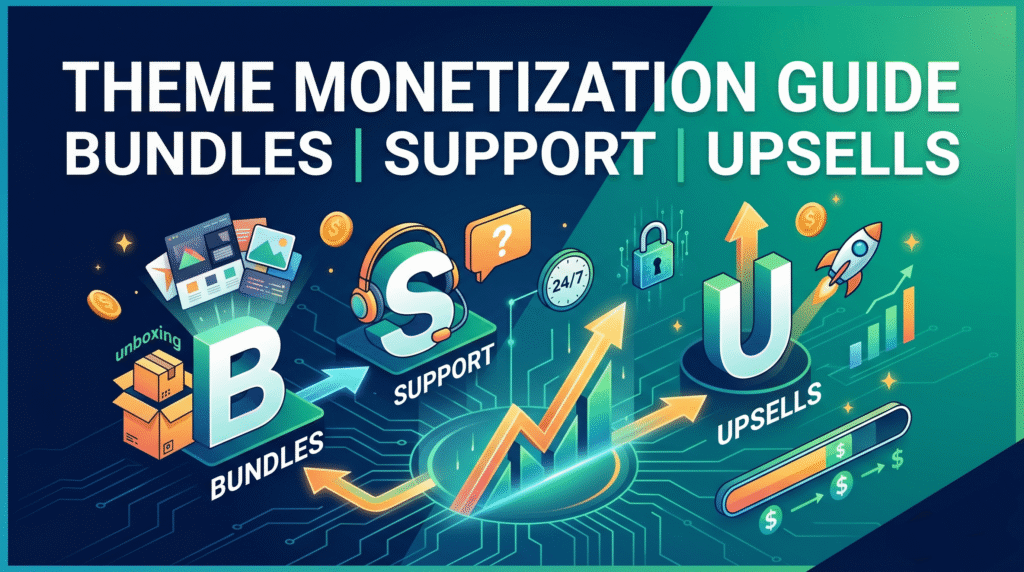
A successful theme monetization strategy goes far beyond selling a single website theme for a one-time payment.
Top-performing theme creators maximize revenue through:
- Product bundles
- Premium support plans
- Design service upsells
- Template libraries
- Subscription memberships
- Add-on packs
- White-label licensing
- Agency plans
- Educational products
The most profitable theme businesses often generate more revenue from recurring services and upgrades than from the initial theme purchase itself.
Why Most Theme Sellers Leave Money on the Table
Thousands of developers and designers spend months building exceptional WordPress themes, Shopify templates, Webflow designs, Framer kits, or UI component libraries.
Then they make a common mistake:
They sell a single product once.
A customer buys a $49 theme.
The transaction ends.
No recurring revenue. No upsells. No long-term relationship.
Meanwhile, leading digital product businesses earn significantly higher customer lifetime value (LTV) by creating monetization ecosystems around their products.
Instead of earning:
- $49 per customer
They earn:
- $49 initial sale
- $99 support upgrade
- $199 template bundle
- $299 customization service
- $29/month membership
Suddenly, a single customer becomes worth hundreds or even thousands of dollars.
This guide explains exactly how to build that system.Table of Contents
- What Is Theme Monetization?
- Why Theme Monetization Matters
- The Modern Theme Business Model
- Revenue Streams Every Creator Should Offer
- Theme Bundle Strategies
- Premium Support Monetization
- High-Converting Upsell Models
- Subscription Revenue Systems
- Pricing Psychology for Theme Businesses
- Building a Monetization Funnel
- Common Mistakes to Avoid
- Monetization Roadmap
- Expert Recommandation
- FAQs
- Conclusion
What Is Theme Monetization?
Definition
Theme monetization is the process of generating revenue from website themes, templates, UI kits, and design assets through direct sales, recurring subscriptions, support services, licensing, and complementary products.| Product | Monetization Method |
|---|---|
| WordPress Theme | Direct Sales |
| Shopify Theme | Premium Licensing |
| Webflow Template | Bundle Sales |
| Framer Template | Subscription Library |
| UI Kit | Membership Access |
| Design System | Agency License |
The objective is not merely selling a theme.
The objective is maximizing:
- Revenue per customer
- Customer lifetime value
- Recurring income
- Brand authority
Why Does Theme Monetization Matter?
Market Reality
The digital product industry has become increasingly competitive.
Customers now expect:
- Better support
- Faster updates
- More features
- Greater flexibility
Creators who rely solely on one-time sales often struggle with:
❌ Revenue fluctuations
❌ Platform dependency
❌ High acquisition costs
❌ Unpredictable cash flow
Meanwhile creators with recurring monetization models enjoy:
✅ Predictable monthly revenue
✅ Better customer retention
✅ Higher profit margins
✅ Stronger business valuation
The Modern Theme Business Model
Traditional Model
Build Theme
    ↓
Sell Once
    ↓
End
Modern Monetization Model
Build Theme
    ↓
Sell Theme
    ↓
Upsell Bundle
    ↓
Premium Support
    ↓
Subscription Access
    ↓
Agency License
    ↓
Customization Services
    ↓
Recurring Revenue
The second model can increase customer value by 5–20x.
Revenue Streams Every Theme Creator Should Offer
Revenue Layer #1: Core Theme Sales
This is your entry point.
Examples:| Platform | Price Range |
|---|---|
| WordPress | $39-$99 |
| Shopify | $99-$350 |
| Webflow | $49-$129 |
| Framer | $29-$149 |
Best Practice
Keep the entry price attractive.
Your real profits often come later.Revenue Layer #2: Website Template Bundles
Why Bundles Work
Customers rarely need only one template.
A business owner may need:
- Landing page
- Blog template
- Portfolio layout
- Pricing page
- Contact page
Bundling increases perceived value dramatically.
Bundle Pricing Example
| Product | Individual Price |
|---|---|
| Template A | $49 |
| Template B | $49 |
| Template C | $49 |
| Template D | $49 |
Total Value = $196
Bundle Price = $99
Customer saves money.
You increase average order value.
Everybody wins.
Bundle Ideas
Starter Bundle
- 5 templates
- Basic support
Business Bundle
- 15 templates
- Priority support
- Updates
Agency Bundle
- Unlimited usage
- Commercial rights
- Team access
Premium Support: The Most Underrated Revenue Stream
Why Support Sells
Many customers are not buying code.
They are buying confidence.
Support often becomes one of the highest-margin offerings.Support Pricing Matrix
| Plan | Price |
|---|---|
| Community Support | Free |
| Standard Support | Included |
| Priority Support | $49/year |
| VIP Support | $199/year |
| Agency Support | $499/year |
What Premium Support Includes
Priority Ticket Response
Standard:
- 48–72 hours
Premium:
- 4–12 hours
Installation Help
Offer:
- Theme installation
- Demo import
- Plugin setup
Troubleshooting
Help customers solve:
- CSS issues
- Responsive bugs
- Compatibility problems
Pro Tip
Many creators fear charging for support.
However, businesses gladly pay for reduced downtime.
Support is often easier to sell than additional design products.
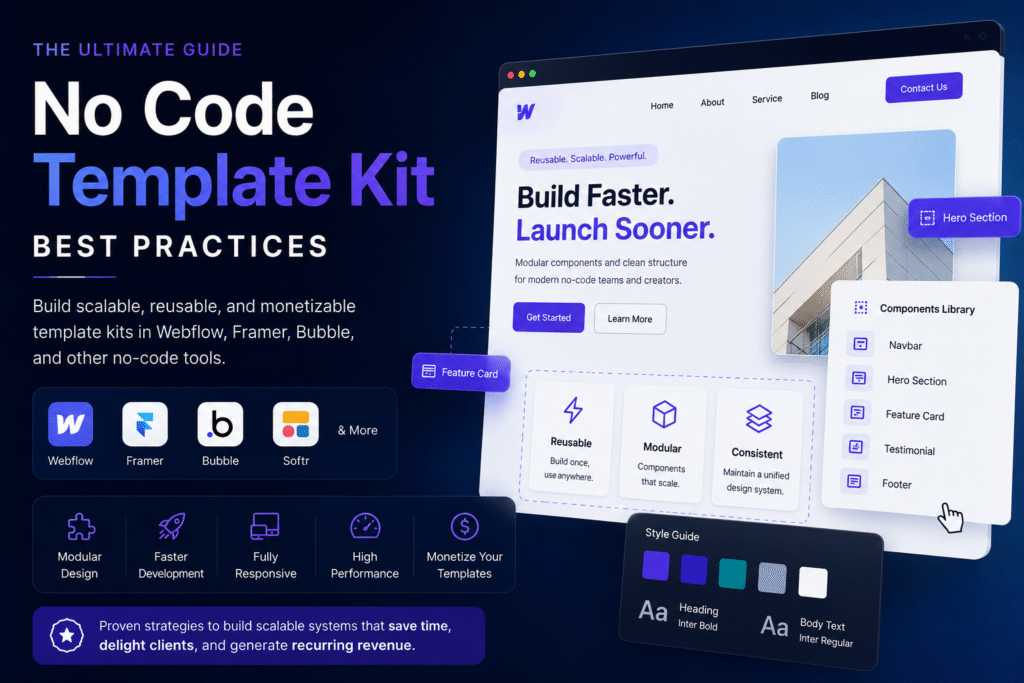
No Code Template Kit Best Practices for Scalable Design
Creating reusable template kits is no longer just a productivity hack. For modern no-code developers, designers, and digital creators, reusable systems are the foundation of scalable operations.
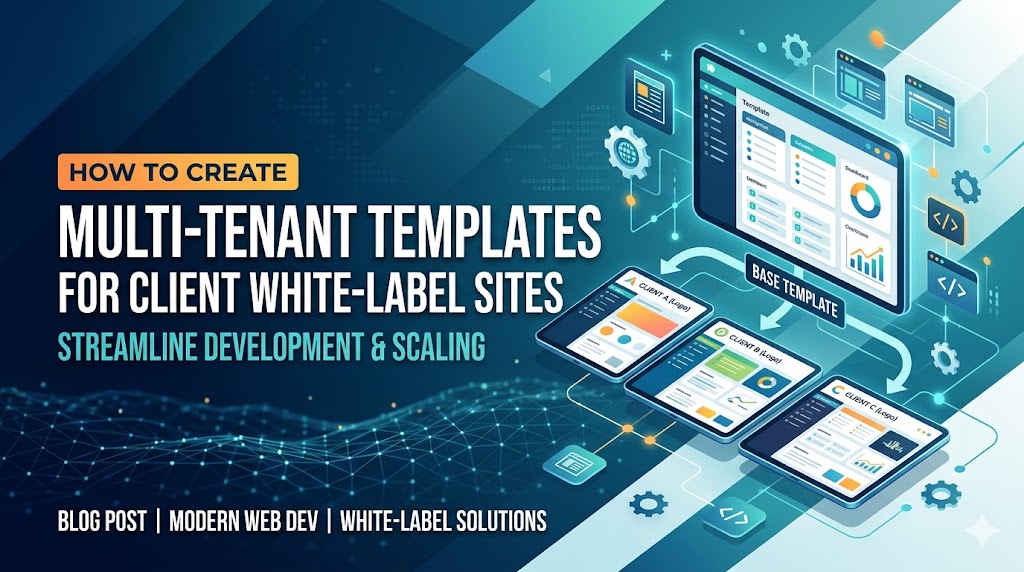
How to Create Multi-Tenant Templates for Client White-Label Sites
Modern SaaS companies rarely build a completely separate frontend for every customer anymore. Instead, they rely on multi-tenant templates white label architectures that allow a single codebase...
Theme Development Upsells That Actually Convert
What Are Theme Development Upsells?
Additional products or services offered after the initial purchase.
The best upsells solve immediate customer needs.Upsell #1: Installation Service
Example
Theme Price: $59
Installation Add-on: $79
Conversion rates can be surprisingly high because customers want immediate results.Upsell #2: Custom Branding
Offer:
- Logo integration
- Color customization
- Typography setup
| Service | Price |
|---|---|
| Basic Branding | $99 |
| Advanced Branding | $299 |
| Full Setup | $499+ |
Upsell #3: Additional Templates
Examples:
- Checkout pages
- Landing pages
- Lead generation pages
- Product launch pages
Pricing:
$19-$99Upsell #4: Design Systems
Offer:
- Component libraries
- UI kits
- Figma resources
- Design tokens
This works particularly well for:
- SaaS founders
- Agencies
- Product teams
Upsell #5: Content Packs
Include:
- AI prompts
- Landing page copy
- Email sequences
- Sales copy templates
Recurring Revenue for Theme Developers
The Holy Grail of Monetization
One-time sales create income.
Recurring revenue creates businesses.
Membership Libraries
Offer access to:
- All themes
- Future releases
- UI kits
- Components
- Assets
| Plan | Monthly |
|---|---|
| Creator | $19 |
| Professional | $39 |
| Agency | $99 |
Theme Club Model
Members receive:
- New templates monthly
- Exclusive assets
- Community access
- Product roadmap voting
Update Subscriptions
Offer:
First Year Included
Then:
- Renewal fee
- Ongoing updates
- Security patches
- New features
How to Sell Website Themes More Profitably
The Revenue Ladder Framework
Design your offers like a staircase.
Step 1
Entry Product
$49 Theme
Step 2
Bundle
$99 Package
Step 3
Premium Support
$149/year
Step 4
Customization
$499
Step 5
Agency License
$999
Step 6
Membership
$39/month
This approach dramatically increases customer lifetime value.Pricing Psychology for Theme Businesses
The Rule of Three
Always present three options.| Plan | Price |
|---|---|
| Basic | $49 |
| Pro | $99 |
| Agency | $249 |
Customers naturally gravitate toward the middle option.
Use Anchoring
Example:
Agency License = $399
Professional License = $99
The professional plan appears inexpensive in comparison.
Offer Lifetime Deals Carefully
Pros:
- Fast cash flow
- Quick customer acquisition
Cons:
- Future support burden
- No recurring income
Best used during:
- Launch campaigns
- Black Friday promotions
- Early access programs
Theme Bundle vs Subscription Model
| Factor | Bundle | Subscription |
|---|---|---|
| Initial Revenue | High | Medium |
| Predictability | Low | High |
| Customer Retention | Medium | High |
| Scalability | Good | Excellent |
| Valuation Impact | Medium | Very High |
Recommendation
Use both.
Bundles drive acquisition.
Subscriptions drive sustainability.Building a Complete Monetization Funnel
Funnel Architecture
Blog Content
      ↓
SEO Traffic
      ↓
Lead Magnet
      ↓
Email List
      ↓
Theme Sale
      ↓
Bundle Upsell
      ↓
Support Plan
      ↓
MembershipBest Tools for Theme Monetization
Ecommerce
- WooCommerce
- Easy Digital Downloads
- Lemon Squeezy
- Paddle
Memberships
- MemberPress
- SureMembers
- Outseta
Licensing
- Freemius
- LicenseBox
Email Marketing
- ConvertKit
- Beehiiv
- Mailchimp
Analytics
- Google Analytics
- Plausible
- PostHog
Common Mistakes That Kill Revenue
1. Selling Only One Product
The fastest path to stagnation.
Create product ecosystems.
2. Ignoring Email Marketing
Email consistently outperforms social media for digital product sales.
3. Offering Unlimited Free Support
Support should have boundaries.
Protect your time.
4. No Upsells
Many creators lose 30–70% of potential revenue by failing to present relevant offers.
5. Competing on Price
Cheap themes attract price-sensitive customers.
Premium themes attract serious buyers.
Compete on value.Theme Monetization Roadmap (90 Days)
Month 1
Foundation
- Launch core theme
- Create pricing page
- Setup analytics
- Build email capture
Month 2
Expansion
- Create bundles
- Launch support plans
- Add licensing tiers
- Build onboarding emails
Month 3
Recurring Revenue
- Launch membership
- Release monthly assets
- Add agency plans
- Create affiliate program
Expert Recommendations
If You’re Just Starting
Focus on:
- Great product
- Strong documentation
- Email list
Do not overcomplicate monetization immediately.
If You Already Have Sales
Prioritize:
- Bundles
- Support plans
- Memberships
These usually deliver the fastest revenue growth.
If You’re Established
Build:
- Agency ecosystem
- White-label licensing
- Template marketplace
- Subscription library
This creates long-term defensibility.
Key Takeaways
✔ A theme alone is rarely the business.
✔ Bundles increase average order value.
✔ Support creates high-margin recurring revenue.
✔ Upsells maximize customer lifetime value.
✔ Memberships generate predictable cash flow.
✔ The best theme monetization strategy combines one-time sales and recurring subscriptions.
✔ Successful creators build ecosystems, not standalone products.Frequently Asked Questions
A combination of direct theme sales, bundles, premium support, and subscriptions typically produces the highest long-term revenue.
Most premium themes range between $39 and $350 depending on platform, complexity, support, and licensing.
Bundles generate larger upfront revenue, while subscriptions provide predictable recurring income. Many successful businesses use both.
Offer memberships, support plans, update subscriptions, asset libraries, and agency licensing.
Yes. Premium support is often one of the highest-margin products in a theme business because customers value speed and reliability.
Absolutely. Niche specialization, better support, stronger branding, and direct customer relationships often outperform large marketplaces.
Conclusion
The future of digital product businesses belongs to creators who think beyond one-time sales.
Whether you build WordPress themes, Shopify templates, Webflow assets, Framer products, or custom UI kits, your growth potential depends on creating a complete monetization ecosystem.
A modern theme monetization strategy should combine:
- Core product sales
- Website template bundles
- Premium support
- Theme development upsells
- Membership subscriptions
- Agency licensing
The creators earning the most revenue today are not necessarily building the best themes. They are building the best business models around those themes.
Start by implementing just one additional revenue stream this month. Then add another next quarter. Over time, you’ll transform a simple design product into a scalable, recurring-revenue digital business.
Next Step: Audit your current product catalog and identify at least three monetization opportunities you are not offering today. Those gaps often represent the fastest path to revenue growth.
